Alex Maskara
Thoughts, Stories, Imagination of Filipino American Alex Maskara
Welcome
Book Reviews
~
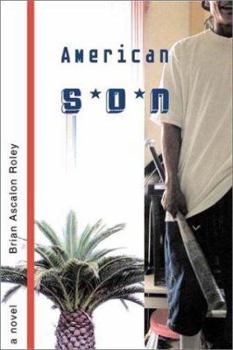
American Son (written much earlier)
by Brian Ascalon Roley
Well, here I go again, disturbing you with my usual “book review.” I put those two words in quotation marks because I never really follow the rules of reviewing. I even tried posting this piece on FLIPS and asked others to share their reviews. I received one good response—just one. If only I were allowed to repost it here. These days, sharing articles from the web is difficult. Copyright must always be respected. So this website remains a one-man show.
I judge books based on my personal response to them. I don’t analyze structure or language in a formal way. I simply react.
As I continue thinking about American Son, I realize that I don’t really know Fil-Am culture or the Fil-Am way of thinking as well as I thought I did.
This review is shaped by my own experience as a native Filipino who never lived through what biracial children experience. Their struggles are different from mine. Their way of seeing the world is different from mine.
So I ask you, dear readers, not to prejudge this book based solely on my feelings. Make no mistake—it is a good book. It allows us to enter the minds of some Fil-Am (biracial) kids. I would genuinely appreciate it if you would share your own reactions to it.
I don’t believe there is such a thing as a “correct” book review. Like art, literature has no single measure.
Read the book.
My Personal Take on American Son
by Brian Ascalon Roley
Christmas is coming. I don’t know about you, but this season has been unexpectedly enjoyable for me. In middle age, I’ve learned to be more flexible with my own idiosyncrasies. I feel more confident in myself and more decisive. I know when to plow through writing when inspiration strikes, and when to stop altogether when exhaustion sets in.
The good thing is that I now write more freely, without worrying about whether anyone is reading or not. I’ve finally learned to say no—to leave things behind, to ignore distractions, to be fierce about my freedom and individuality. I suppose I’m becoming more Americanized. But freedom and individualism are not exclusively American; they are Filipino, too. They are universal.
These days, I alternate between web design and reading fiction. I’m currently immersed in Anne Rice’s Blackwood Farm. I recently finished American Son by Roley and I’m halfway through Holthe’s When the Elephants Dance.
American Son is a simple and direct novel, but it didn’t sit well with me. The Filipino mother is portrayed as almost unbelievably foolish. In all my years living in America, I have never encountered a Filipino mother like that. I wish some Fil-Am writers would take the time to understand their Filipino roots—and the Filipino character—before projecting generalized or stereotypical traits onto Filipinos. It becomes even more troubling when those portrayals seem designed to satisfy American expectations.
I understand that some Fil-Am children may feel ashamed of their Philippine heritage, but that does not justify rationalizing that shame by condemning their own culture. I’ve written about the flaws, the dirt, and the dirty laundry of the Philippines myself—but I do so grounded in lived Filipino truth.
When a Fil-Am writer portrays a Filipino mother as someone who silently bows her head while being screamed at by an American woman—honey, that simply doesn’t ring true. The Filipino mothers I know here in America do not behave that way. They are not passive, frightened, or oblivious. They do not stand by while their children spiral into crime.
And a Filipino mother supposedly raised in wealth—someone from Forbes Park? Come on. I would expect a woman of sophistication, not someone introduced almost as a maid. If this is how some Fil-Am children view their Filipino mothers, then woe to them. They clearly do not understand the caliber of Filipina women.
I don’t know how others experienced this book, but I often felt uncomfortable reading it. Is that because I am a “native” Filipino? There were many moments when I shook my head and thought, This isn’t possible. Or Really? Or What??? Of course, fiction is fiction—but good fiction often feels truer than reality.
In the end, I realized I needed to understand what this book is really trying to do. I had to read it as if I were American. Seen through that lens, the novel is about an American kid trying to find himself within American culture—though it unfortunately ends in violence, in a kind of Dirty Harry / Equalizer fashion. I certainly don’t want Fil-Am kids discovering themselves this way, but the existence of this story suggests that such paths are possible.
This is a Fil-Am novel, and I’m beginning to see the early flowering of Fil-Am stories in America. Another Fil-Am story—this time through film—that attempts to explain Fil-Am culture is The Debut. It also centers on a Fil-Am character who feels ashamed of his heritage. I can only hope that this sense of shame does not become a recurring theme—or the heart—of Fil-Am storytelling.
Because there is nothing shameful about being Filipino.
And there is nothing shameful about our culture.
2026-01-26 15:38:42
bookreviews
American Son
American Son (written much earlier)
by Brian Ascalon Roley
Well, here I go again, disturbing you with my usual “book review.” I put those two words in quotation marks because I never really follow the rules of reviewing. I even tried posting this piece on FLIPS and asked others to share their reviews. I received one good response—just one. If only I were allowed to repost it here. These days, sharing articles from the web is difficult. Copyright must always be respected. So this website remains a one-man show.
I judge books based on my personal response to them. I don’t analyze structure or language in a formal way. I simply react.
As I continue thinking about American Son, I realize that I don’t really know Fil-Am culture or the Fil-Am way of thinking as well as I thought I did.
This review is shaped by my own experience as a native Filipino who never lived through what biracial children experience. Their struggles are different from mine. Their way of seeing the world is different from mine.
So I ask you, dear readers, not to prejudge this book based solely on my feelings. Make no mistake—it is a good book. It allows us to enter the minds of some Fil-Am (biracial) kids. I would genuinely appreciate it if you would share your own reactions to it.
I don’t believe there is such a thing as a “correct” book review. Like art, literature has no single measure.
Read the book.
My Personal Take on American Son
by Brian Ascalon Roley
Christmas is coming. I don’t know about you, but this season has been unexpectedly enjoyable for me. In middle age, I’ve learned to be more flexible with my own idiosyncrasies. I feel more confident in myself and more decisive. I know when to plow through writing when inspiration strikes, and when to stop altogether when exhaustion sets in.
The good thing is that I now write more freely, without worrying about whether anyone is reading or not. I’ve finally learned to say no—to leave things behind, to ignore distractions, to be fierce about my freedom and individuality. I suppose I’m becoming more Americanized. But freedom and individualism are not exclusively American; they are Filipino, too. They are universal.
These days, I alternate between web design and reading fiction. I’m currently immersed in Anne Rice’s Blackwood Farm. I recently finished American Son by Roley and I’m halfway through Holthe’s When the Elephants Dance.
American Son is a simple and direct novel, but it didn’t sit well with me. The Filipino mother is portrayed as almost unbelievably foolish. In all my years living in America, I have never encountered a Filipino mother like that. I wish some Fil-Am writers would take the time to understand their Filipino roots—and the Filipino character—before projecting generalized or stereotypical traits onto Filipinos. It becomes even more troubling when those portrayals seem designed to satisfy American expectations.
I understand that some Fil-Am children may feel ashamed of their Philippine heritage, but that does not justify rationalizing that shame by condemning their own culture. I’ve written about the flaws, the dirt, and the dirty laundry of the Philippines myself—but I do so grounded in lived Filipino truth.
When a Fil-Am writer portrays a Filipino mother as someone who silently bows her head while being screamed at by an American woman—honey, that simply doesn’t ring true. The Filipino mothers I know here in America do not behave that way. They are not passive, frightened, or oblivious. They do not stand by while their children spiral into crime.
And a Filipino mother supposedly raised in wealth—someone from Forbes Park? Come on. I would expect a woman of sophistication, not someone introduced almost as a maid. If this is how some Fil-Am children view their Filipino mothers, then woe to them. They clearly do not understand the caliber of Filipina women.
I don’t know how others experienced this book, but I often felt uncomfortable reading it. Is that because I am a “native” Filipino? There were many moments when I shook my head and thought, This isn’t possible. Or Really? Or What??? Of course, fiction is fiction—but good fiction often feels truer than reality.
In the end, I realized I needed to understand what this book is really trying to do. I had to read it as if I were American. Seen through that lens, the novel is about an American kid trying to find himself within American culture—though it unfortunately ends in violence, in a kind of Dirty Harry / Equalizer fashion. I certainly don’t want Fil-Am kids discovering themselves this way, but the existence of this story suggests that such paths are possible.
This is a Fil-Am novel, and I’m beginning to see the early flowering of Fil-Am stories in America. Another Fil-Am story—this time through film—that attempts to explain Fil-Am culture is The Debut. It also centers on a Fil-Am character who feels ashamed of his heritage. I can only hope that this sense of shame does not become a recurring theme—or the heart—of Fil-Am storytelling.
Because there is nothing shameful about being Filipino.
And there is nothing shameful about our culture.
2026-01-26 15:38:42
bookreviews