Alex Maskara
Thoughts, Stories, Imagination of Filipino American Alex Maskara
Welcome
HOME
Reflection 1/4/26
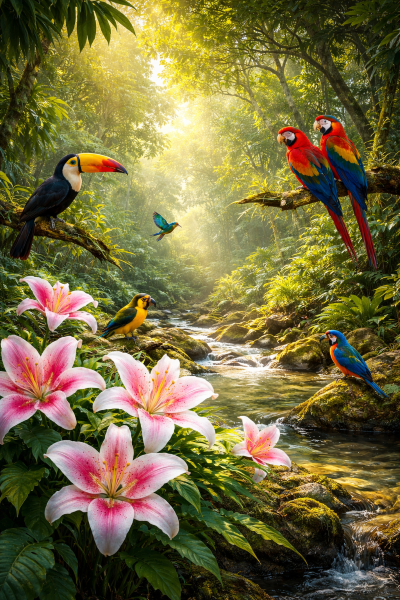
Luke 12:22–31
Do Not Worry
Jesus said to His disciples, “Therefore I tell you, do not worry about your life—what you will eat—or about your body—what you will wear. For life is more than food, and the body more than clothing. Consider the ravens: they do not sow or reap, they have no storeroom or barn, yet God feeds them. And how much more valuable you are than birds! Who among you, by worrying, can add a single hour to your life? Since you cannot do this very small thing, why worry about the rest?
“Consider how the wildflowers grow. They do not labor or spin. Yet I tell you, not even Solomon in all his splendor was dressed like one of these. If that is how God clothes the grass of the field—which is here today and tomorrow is thrown into the fire—how much more will He clothe you, O you of little faith! And do not set your heart on what you will eat or drink; do not worry about it. For the world runs after such things, and your Father knows that you need them. But seek His kingdom, and these things will be given to you as well.”
---
I am grateful that my recovery from the tooth extraction is going well. I have not experienced the complications I endured more than nine years ago, when a dental extraction ended in hospitalization. At that time, I partly blamed the dentist. Given that I was diabetic and suffering from a severely infected tooth, the follow-up care felt inadequate. I was sent home with nothing more than advice to buy ibuprofen at a drugstore. I also suspect that the absence of insurance then affected the level of care I received; No insurance didn't require high care; today, mistakes carry consequences, including removal from insurance networks.
This time, I was very intentional. I clearly communicated my medical history, my medications, and my prior experience to my new dentist. He responded appropriately—prescribing antibiotics, medicated mouthwash, and pain medication, and giving clear post-procedure instructions. While those instructions were helpful, I am also aware that modern tools—including AI—now provide detailed, evidence-based guidance for post-extraction recovery.
I am now four to five days post-surgery, with no signs of infection, pain, or swelling. So far, so good. I have been careful with my diet, consistent with my medications, and methodical with oral hygiene. After several days of salt-water rinses, I am now transitioning to the prescribed mouthwash. I am hopeful for healthier gums, especially since the dentist still noted traces of pus near the area of my dead canine teeth. Age and diabetes have likely contributed to chronic gingivitis. Addressing this is no longer just about appearance or dentures; it is about preserving gum health and preventing further damage. I plan to continue the prescribed treatment and later add an alcohol-free mouthwash as part of long-term dental maintenance.
This is what I mean when I talk about fully attending to my health in retirement. I have been working closely with my primary care physician, cardiologist, neurologist, and laboratory services. Overall, the feedback has been encouraging, aside from the expected diabetic-related issues that I manage through medication, diet, and exercise. Dental care was the missing piece. It took time—and courage—to face my fear after what happened nine years ago. But addressing long-neglected dental issues, including decaying gums and embedded dead teeth, is essential as I move forward.
Worries—yes, worries. They have been a long time coming. Retirement has arrived, and the first year was brutal: the loss of two siblings only weeks apart, followed by my own health crisis last spring, endless medical appointments, and delays caused by changes in providers. Still, I am praying that this year will be gentler.
Early this morning, around 3:30 a.m., someone knocked at the door. I did not answer. My guess is that Jeff may have returned after being discharged from his three-month rehab stay. He can always come back at a more appropriate time. For now, I am still recovering and not ready to engage.
What matters most at this moment connects directly to the passage about the birds and the lilies.
Consider them. They remain where they are. One might call them “unambitious,” yet they fulfill a purpose beyond complaint. Birds roam the skies; lilies grow quietly, manifesting beauty. They do not strive, train, compete, or obsess. Birds scatter seeds that take root far from where they fly. Lilies stand still, offering beauty that humans instinctively appreciate. They simply exist as they were created to exist.
Humans, by contrast, are different. We are given the power—and the burden—of shaping our purpose. Embedded within each person are gifts, talents, and inclinations that rise above the ordinary. Some are gifted in music or athletics, others in language, reasoning, mathematics, science, or invention. I believe that every individual carries something within them that is uniquely their own.
Existentialists argue that existence precedes essence—that a person must discover their meaning after they are born. Birds and lilies do not face this task; their essence is fixed. Humans, however, are privileged—and troubled—by choice. We are free to cultivate our gifts or abandon them.
Too often, gifts are set aside to meet the demands of survival. A poet becomes a nurse because it pays the bills. A brilliant mind capable of scientific breakthroughs is forced into an unrelated path because advanced education is financially out of reach. One of the clearest modern examples of lost essence is what I call *rewarded mediocrity*—the outcome of social media algorithms. Young people, hungry for acceptance, abandon depth and authenticity in exchange for likes, views, and monetization. Even adults fall into this trap, creating content not from conviction but from what performs well.
Some resist. They continue to create from the heart, ignoring algorithmic demands. That is where the line must be drawn. Create freely and passionately—but do not let the world dictate your soul. Authenticity and originality are the essence God encourages, and perhaps even philosophers like Sartre would agree.
This is where I stand now. I have grown weary of social media’s obsession with traffic over substance, engagement over meaning. The drive for visibility has descended so far that even public figures, entrusted with dignity and restraint, participate in crude, verbal degradation for attention. That is not a world I wish to inhabit.
Instead, I return to writing—quiet contemplation—as a form of prayer and communion with the Holy Spirit. I am deliberately resisting the habit of reflexively reaching for my phone in idle moments. Mindfulness has helped. I try to stay present, attentive to what I am doing *now*. I am also restructuring my days to reflect what I would naturally choose if distractions were removed.
I often ask myself this question: *If I were stranded on a deserted island, what would sustain me?* A phone with internet access would defeat the purpose; it would keep me tethered to the same noise. What I would truly want are books to read, a pen, and an endless notebook. I would begin by writing—exactly as I am doing now. From meditation, I would rise and walk the island, letting long-suppressed thoughts surface. I would explore the boundaries of my imagination, finally free from the distractions of the world I left behind.
And perhaps that is what Jesus meant all along: trust, attend, and seek what truly matters. Everything else will follow.
2026-01-05 02:05:44
blog
Visions of St Lazarus Chapter 7
Reflection on Being Alone with a Purpose
Contemplation of an Ordinary Man
American Son by Brian Ascalon Roley
Linda Ty-Casper: Awaiting Trespass
Personal Thoughts while Sampling the poetry of Nick Carbo
Naomi: Reflection on Holy Week
Visions of St Lazarus : Expanded version of Lazarus Kafkaesque Paper
Ramon Santos Reflections While Recovering
The Mild Stroke of Ramon Santos
Popong 22: Meditation On Handling Temptations
Popong 21 - Friday Night Reflection
Popong 19/ Life is Learning and Exploring
Popong 18 / Avoiding Distraction
Popong 12 / Meditation on Computer Obsession
Sunday Thoughts and Book Review
A Night at the Luneta Grandstand
Understanding my unique Self on my way to Retirement
A Visit to Quiapo with El Fili2
THE DIARY OF ANTONIO PIGAFETTA
Brother, My Brother (Ben Santos)